
How to Check Criminal History in Gilmer County
Gilmer County has no single public database that combines every arrest, court event, prison stay, and fingerprint-supported history. Begin with the free West Virginia Magistrate Case Record Search for misdemeanors and early felony proceedings. Use WVPASS for public circuit records dating to 1999. Search the regional jail system for current or recent custody, and ask the office that created a report for the source narrative.
Gather the full legal name, spelling variants, an approximate date, and a case or incident number when one is known. Do not treat a same-name result as a match without checking case location, agency, filing date, and other lawful identifiers. For a final outcome, obtain the judgment or order from the relevant clerk. That document carries more weight than a booking label or a partial search result.
- Search the magistrate docket by name or case number and limit the county to Gilmer.
- Check WVPASS for felony and circuit material, especially cases from 1999 forward.
- Use the WVDCR Regional Jail or DOC search when custody or transfer status matters.
- Contact the arresting agency for its incident or arrest report and the clerk for filed documents.
- Use WVSP fingerprint review when checking or challenging your own repository record.
Two Gilmer County Courthouse Addresses
Local criminal record work centers on a compact Glenville courthouse area, yet official directories use two street addresses. The Circuit Clerk, Sheriff, Prosecuting Attorney, and probation office list 10 Howard Street. The Magistrate Clerk lists the Gilmer County Courthouse at 201 North Court Street. These listings refer to different counters in the same justice-office cluster, not two county seats.
Call the correct counter before a trip. Felony files and circuit orders go through the Circuit Clerk. Misdemeanor dockets and preliminary felony papers go through the Magistrate Clerk. Sheriff reports stay with the Sheriff. The Gilmer County government directory shows the local offices that split these duties.
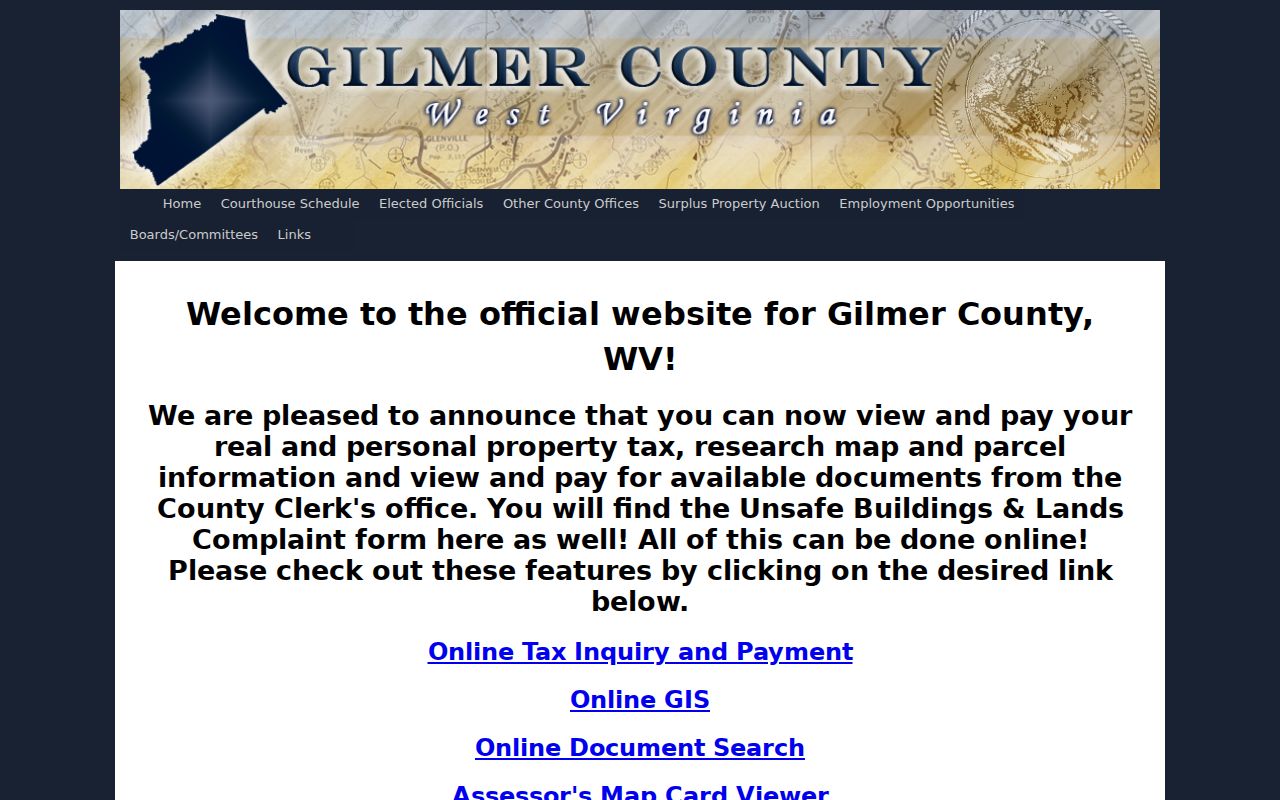
The directory helps a reader avoid sending a criminal records request to a county office that does not own the requested file.
Official West Virginia Background Checks
The West Virginia State Police Criminal Identification Bureau maintains the state criminal-history repository. West Virginia does not offer the public an unrestricted name-search product for a complete CIB history. The repository is fingerprint based. A public court search can reveal a case, but it does not replace a fingerprint-supported repository review and should not be described as a full state history.
For review or correction of your own state record, WVSP instructions use Form 136A and a $20 check or money order payable to the Superintendent, West Virginia State Police. The request goes to CIB at 725 Jefferson Road, South Charleston, WV 25309. Agency-authorized state or FBI checks begin through IdentoGO with a service code supplied by the sponsoring agency. No permanent capture site in Gilmer County was confirmed, so the scheduling location finder controls.
| Official product | Scope | Verified cost |
|---|---|---|
| WVSP Form 136A | Your West Virginia fingerprint record and challenge | $20 processing fee |
| IdentoGO | Program-authorized state or FBI fingerprint check | Varies by service code |
| FBI Identity History Summary | Your FBI fingerprint-associated history | Current fee shown during ordering |
| Magistrate Search | Public lower-court docket data | Free |
| WVPASS | Public circuit search and documents since 1999 | Search free; $0.25 per page plus processing |
Review Your Gilmer County CIB Record
A CIB history groups fingerprint-linked arrest cycles with dispositions reported back by courts and agencies. If an entry is wrong or lacks an outcome, identify the precise charge, arrest date, agency, and court disposition before starting a challenge. WVSP may direct a disputed charge or outcome back to the court or arresting agency that submitted it. That source office is best placed to correct its part of the data flow.
A federal self-check follows a separate route. The FBI electronic ordering portal accepts Identity History Summary requests from the subject of the record, with fingerprints and the current FBI fee.
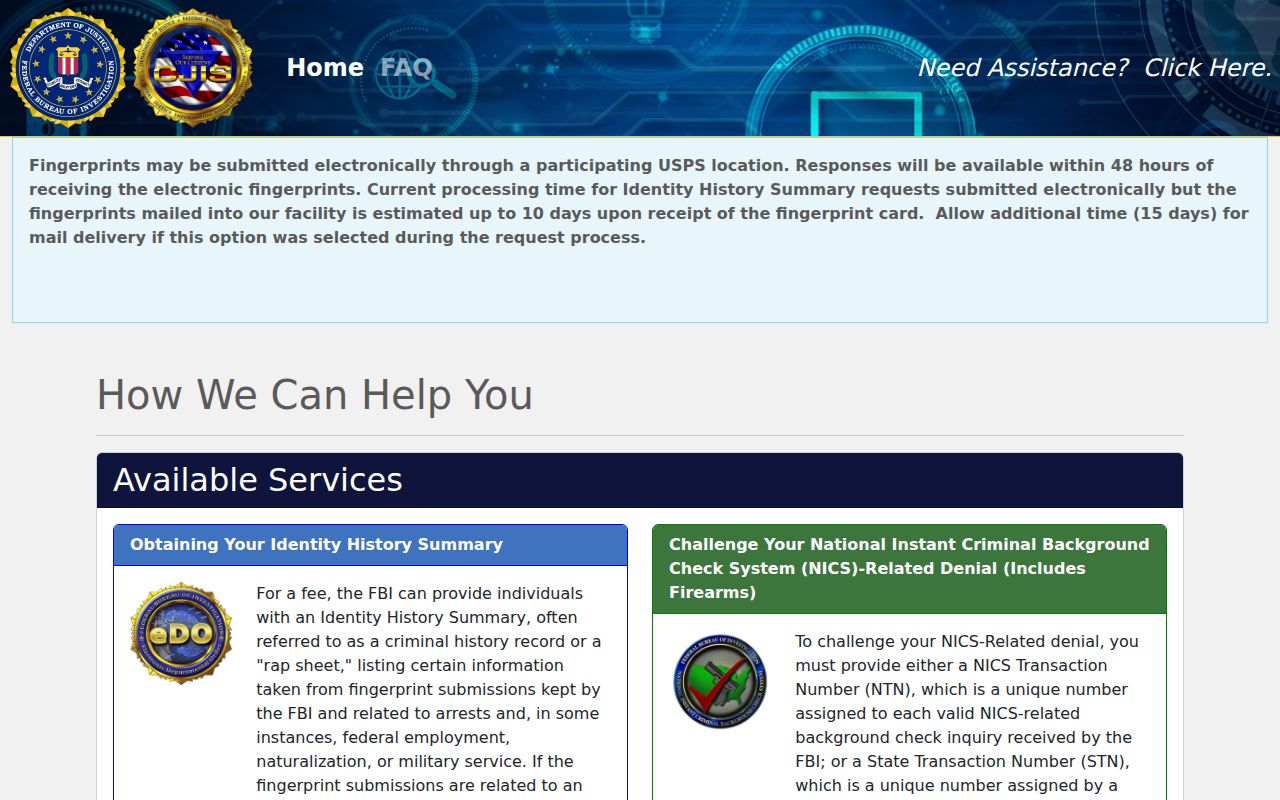
An FBI summary is not a certified Gilmer County court file, so verify the outcome of a local case with the clerk that entered the judgment.
Types of Criminal Records
The term criminal record can hide several distinct products. Gilmer County arresting agencies create incident and arrest reports. WVDCR staff create a booking profile after a person enters regional custody. Magistrate and circuit clerks maintain prosecution files. WVSP links fingerprints to reported arrest and disposition cycles. Each record has its own custodian and update schedule.
- Incident and arrest report: the originating agency's narrative, alleged offense, location, and investigative details, subject to redaction.
- Booking record: intake, custody site, charges, bail, and other jail fields, not a finding of guilt.
- Court case: complaint or indictment, docket events, pleas, orders, judgment, and sentence.
- CIB history: fingerprint-associated cycles and reported dispositions held by WVSP.
- Custody or supervision record: regional jail, prison, parole, absconder, or court probation information.
- Registry record: information WVSP publishes under the Sex Offender Registration Act.
A warrant is another distinct record. Gilmer County has no complete public active-warrant portal, and a blank court search does not rule out new, active, or sealed process.
Gilmer County Bookings Go to Sutton
The Gilmer County Sheriff does not operate a local jail roster. People taken into custody are generally routed to Central Regional Jail and Correctional Facility in Sutton, which is in Braxton County. WVDCR runs the facility and the Regional Jail inmate search. Enter at least the first three letters of a surname; first name is optional. A match reports custody data, not guilt.
After sentencing or transfer, a person may disappear from the regional search and appear in the separate DOC Offender Search. Facility and sentencing-county fields need careful review because the state system spans many counties. The online disclaimer also warns that location and release data can change fast. Confirm a critical custody fact with WVDCR and read the court judgment for the legal outcome.
| Regional Jail Search | Current or recent regional custody, started with three surname letters |
|---|---|
| DOC Offender Search | Sentenced state custody or supervision after transfer |
| Magistrate Search | Initial appearance, bond, misdemeanor, and preliminary felony docket |
| Agency report | The officer's source narrative and alleged facts |
What a Gilmer County Criminal Record Shows
Fields depend on the source. A repository history stresses identity and fingerprint-linked cycles. A court file stresses parties, counts, events, pleas, disposition, and sentence. A booking profile stresses intake and custody. Compare names and case identifiers, but never assume that one system's current label is the final word in another system.
| Name and identifiers | Legal name, aliases, birth details, physical descriptors, and agency numbers where law permits |
|---|---|
| Arrest and booking | Arresting agency, date, alleged charge, intake, facility, bail, and custody status |
| Case information | Case ID, court, filing date, parties, hearings, docket entries, and judge |
| Charges and statutes | Separate counts, cited sections, offense dates, and later amendments |
| Disposition | Conviction, dismissal, acquittal, plea result, or another charge-level outcome |
| Sentence and supervision | Confinement, probation, restitution, or other court-ordered terms |
- Disposition
- The outcome of one charge, such as conviction, dismissal, or acquittal.
- Indictment
- A grand jury's formal accusation, not a finding of guilt.
- Capias
- Court process directing custody, often after a failure to appear or comply.
- Nolle prosequi
- A prosecutor's formal choice not to continue a charge at that time.
Read every count on its own. One charge can be dismissed while another ends in conviction, and a bond entry reports release conditions rather than the final result.
WVPASS Opened Gilmer County Circuit Files
Gilmer County circuit e-filing began in 2018. Statewide CourtPLUS deployment finished in 2024, and WVPASS opened public circuit access statewide in March 2025. The service covers publicly available circuit records dating to 1999. Registration and searching are free, while public document downloads cost $0.25 per page plus card processing.
That change matters in a rural county where a trip to the clerk was once the standard route. It did not make every paper public or place older archives online. For a pre-1999 case, a missing scan, a certified copy, or a sealed-index question, call the Circuit Clerk at 304-462-7241. The Judiciary's Gilmer County directory confirms the local court and probation contacts.
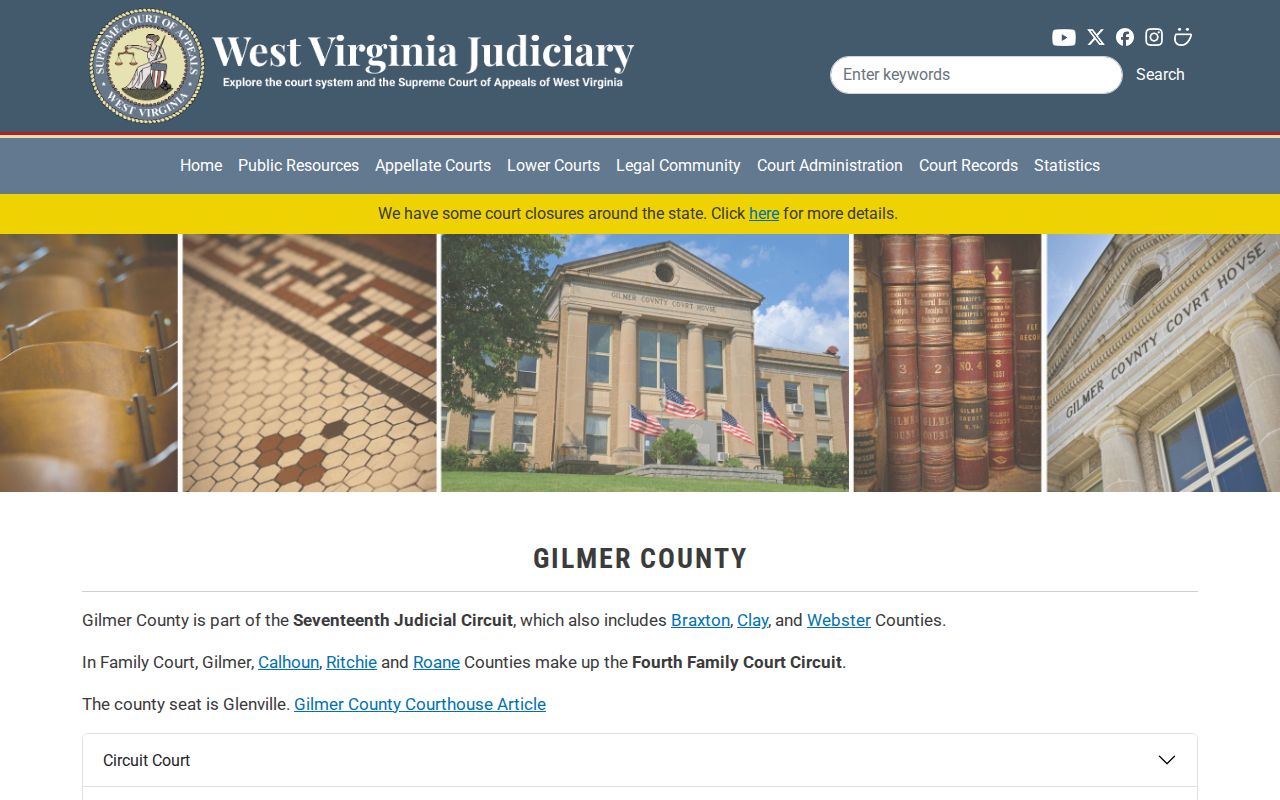
The directory also distinguishes the circuit, magistrate, and probation offices that share Gilmer County record work.
Public Access Laws
West Virginia law allows broad access to many government and court records, but the right attaches to a particular record and custodian. It does not turn confidential juvenile material, protected victim data, an active investigative file, or a sealed case into public information. A clerk may supervise inspection and apply lawful copying rules.
Key West Virginia laws:
W. Va. Code §29B-1-3 requires a reasonably specific FOIA request and a production, inspection arrangement, or written denial within the statutory response window.
W. Va. Code §29B-1-4 lists exemptions for protected investigative, privacy, security, and other material.
W. Va. Code §51-4-2 supports inspection and copying of court papers unless another restriction applies.
W. Va. Code §49-5-104 controls juvenile confidentiality and sealing.
Ask for the narrowest useful file. An exact record type, date range, location, incident or case number, and preferred electronic format help the custodian locate it and separate releasable pages from protected content.
Gilmer County FOIA Timing Explained
Gilmer County does not publish a sheriff records portal, downloadable request form, or public fee schedule. A request for a sheriff-created report can go by email, mail, or in person to the Sheriff's Office. Calling first at 304-462-7441 can confirm routing. Fax is published, but the office does not expressly identify it as a FOIA submission channel.
The West Virginia Freedom of Information Act requires the custodian to act as soon as practical and within five days, excluding weekends and legal holidays. Within that period, the office may provide copies, set a time for inspection, or explain a denial in writing. The deadline is not a promise that a large production will be complete in five days. Ask for an estimate before costs pass a stated limit, and request electronic copies when suitable.
Sealed, Expunged & Restricted
Juvenile cases, protected addresses, confidential victim information, personal identifiers, sealed matters, and qualifying investigative content may be withheld. An absent search result can also reflect date coverage, reporting delay, or a spelling issue. It should not be read as proof that no record ever existed.
West Virginia provides different expungement routes for favorable or diversion outcomes under §61-11-25 and certain convictions under §61-11-26. Waiting periods under the conviction law run from the latest qualifying event and are one year for one misdemeanor, two years for multiple misdemeanors, and five years for an eligible nonviolent felony. Many crimes are excluded, and relief is not automatic.
The conviction expungement statute describes the petition, service, court review, and agency duties.
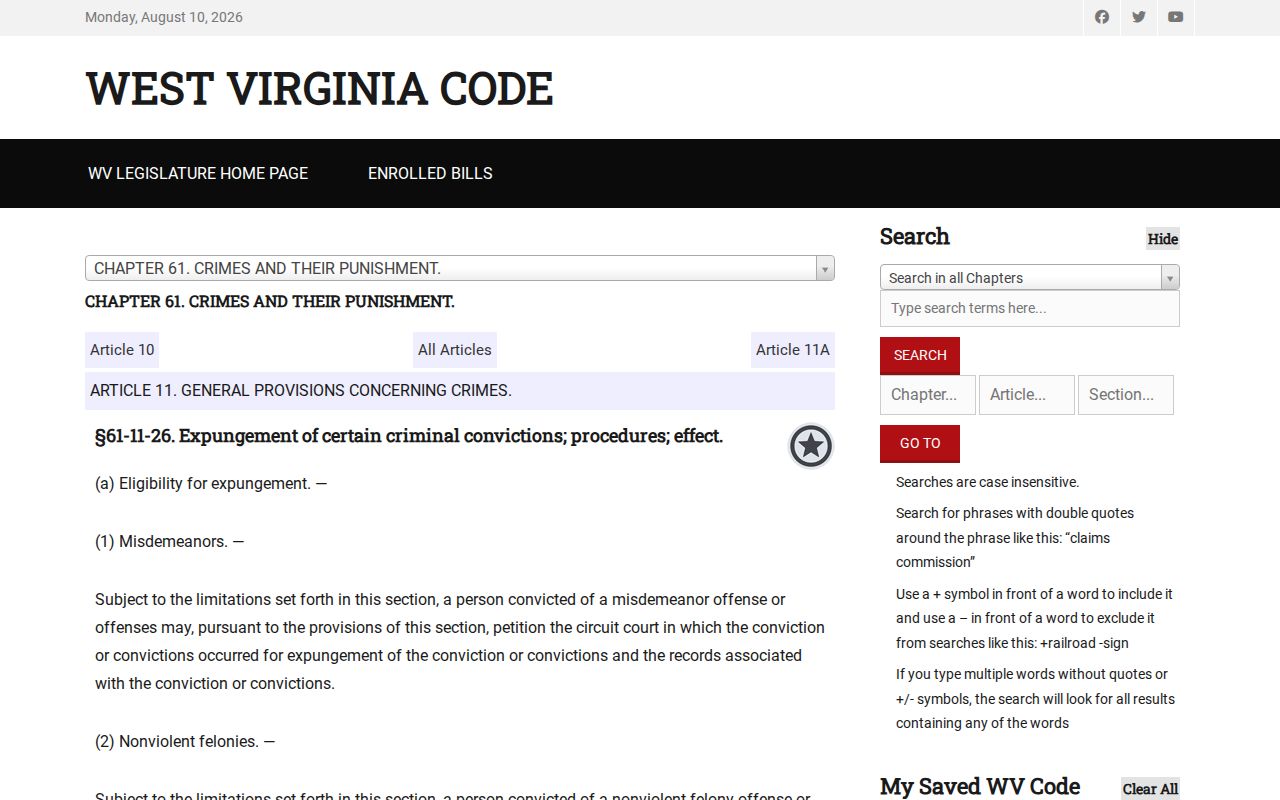
If relief is granted, court records are sealed and covered agency records are expunged as the order directs; the agencies then certify compliance.
No Gilmer County Warrant Portal
No complete public active-warrant search was found for Gilmer County. MCRSearch may show a capias or bond event, but active, sealed, and newly issued process can be missing. Check the issuing court level. The Magistrate Clerk handles magistrate routing at 304-462-7812, the Circuit Clerk handles circuit process at 304-462-7241, and the Sheriff's Office can address service or surrender instructions at 304-462-7441.
Use care when checking your own possible warrant. Confirmation can lead to immediate arrest. Counsel can contact the court and arrange a lawful appearance. A bench warrant often follows failure to appear or comply, while an arrest warrant initiates custody on probable cause. A search warrant authorizes a search of a place or item and is not a public wanted list.
Note: A blank online docket is not a safe substitute for direct confirmation with the issuing court and the Gilmer County Sheriff.
Criminal Records by City in Gilmer County
Gilmer County has two incorporated towns in the official research: Glenville and Sand Fork. Glenville is the county seat and has a municipal police route, but detention still moves to the state regional jail system. Sand Fork has no verified town police department or municipal court portal, so a search starts by identifying the county or state agency that created the record.
The city guides stay at local scale. They show how an incident moves from the town or responding agency into Gilmer County courts and, when custody follows, to the regional jail in Sutton.
Glenville Criminal History
Population 1,128 in 2020. City reports, county courts, and Sutton custody form separate layers.
Sand Fork Criminal History
Population 180 in 2020. Sheriff, WVSP, WVDCR, and county court channels provide the practical route.
How Gilmer County Records Move
An arresting officer first creates an incident or arrest report. If custody follows, WVDCR staff make the booking record, take fingerprints, and record facility status. A magistrate handles the initial appearance, bail, misdemeanors, and preliminary felony work. The Prosecuting Attorney may then proceed, and felony papers move into Circuit Court. WVSP's CIB links the fingerprint transaction to the identity and relies on later disposition reporting.
Record flow: Arresting agency → WVDCR booking → Magistrate Court → Prosecuting Attorney → Circuit Court when felony charges continue → CIB disposition update.
A gap at any point can produce a partial picture. The state announced criminal-history improvement funding in 2026 to improve disposition reporting and exchanges between judiciary and law-enforcement systems. Until each source aligns, use the originating report for the event, the clerk's final order for the case result, WVDCR for custody, and CIB for your fingerprint-supported state history.