
Running a Sex Offender Check in Gilmer County
The official starting point for a Gilmer County sex offender check is the West Virginia Sex Offender Registry. The West Virginia State Police maintains this statewide public system. No separate Gilmer County list, county map, registry alert app, or local offender-search portal was found in the official sources. That makes the state registry the direct public channel for a county-level search. Searchers can use a name when identity is known or use Gilmer County, a city, a ZIP code, or an address-based radius when the goal is community awareness.
A name by itself can be too broad. Compare aliases, a photograph, physical details, offense data, and the public address before deciding that a profile matches the person sought. A place search serves a different aim: it helps a household review records near an address without guessing a name. Because the registry warns that data can change or remain under verification, treat every result as a point for careful review rather than a personal risk forecast.
Gilmer County Registry Disclaimer Comes First
Every Gilmer County registry search begins with conditions of use. The WVSP registry disclaimer says the agency does not guarantee that all displayed information is complete or accurate. A record may be under review, and a registrant's facts may have changed without notice. Most important, WVSP does not assign a personal score or state how likely a listed person is to offend again. The public record reports registration facts. It does not replace a safety assessment by law enforcement.
The source page also explains the proper use of a Gilmer County sex offender check. It supports reasonable steps for personal, family, and community safety. It does not authorize threats, intimidation, or harassment. The captured disclaimer below shows why accepting those terms is part of the search, not a box to dismiss without reading.
View the official WVSP disclaimer source.
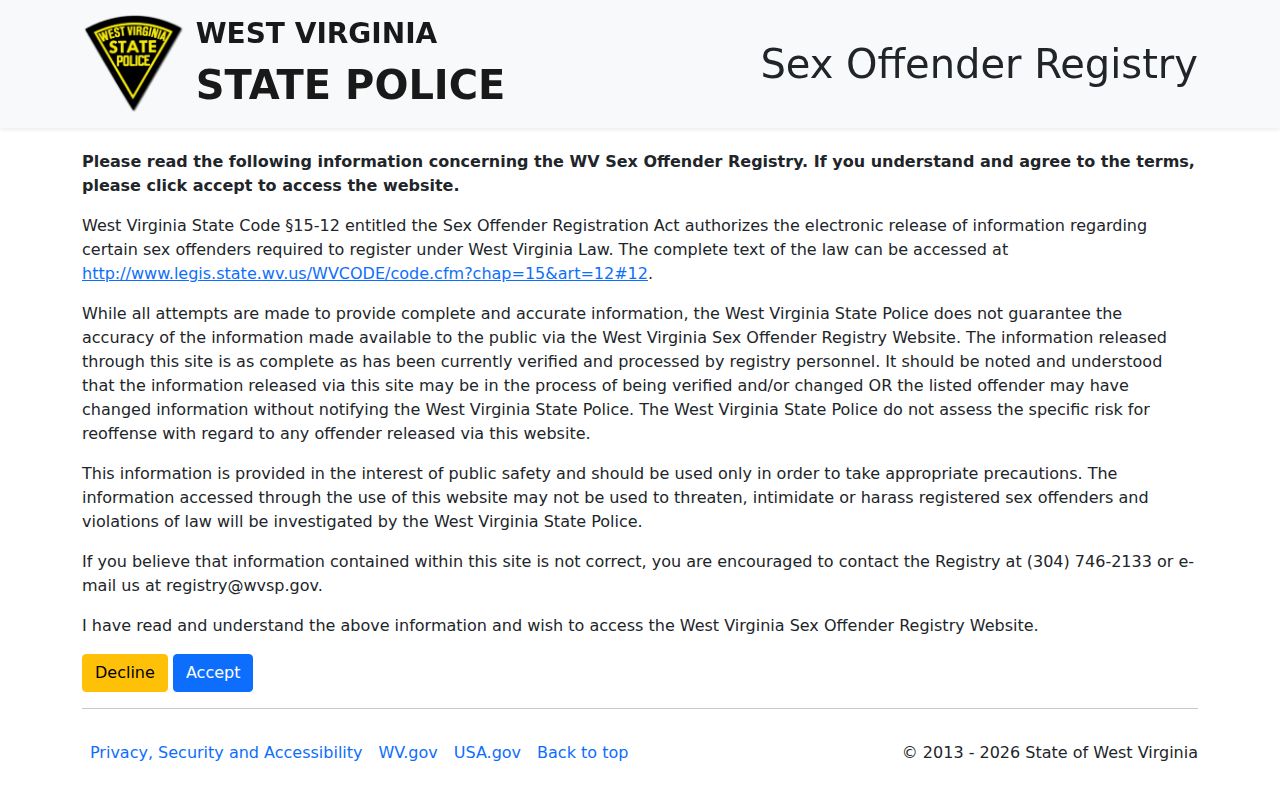
The warning sets the limits for every name, county, and address result reviewed afterward.
Searching the West Virginia Sex Offender Registry
The WVSP portal is free and requires acceptance of its disclaimer before the search controls appear. A Gilmer County sex offender registry search can begin with a person's name or with a place. The county filter is the clearest route for a broad Gilmer County view. An address and radius can narrow a neighborhood check, while city and ZIP fields offer other ways to focus the results. The indexed official material did not expose the exact radius choices, so those miles should be read from the live interface rather than assumed.
- Open the WVSP registry and read, then accept, the official disclaimer.
- Enter a last name and optional first name, or choose Gilmer County and add city, ZIP, street, or radius details.
- Review the results and compare the visible identifiers instead of relying only on a similar name.
- Open the full profile, note its status and update information, and report a suspected error through the WVSP Registry.
The actual controls documented during live research are set out below. None should be treated as mandatory unless the selected search path calls for it.
| Field or Control | Type | Required | Use |
|---|---|---|---|
| Disclaimer acceptance | Button | Yes | Opens the search after the terms are accepted. |
| Last Name | Text | Search-dependent | Starts a name search. |
| First Name | Text | No | Narrows a name search. |
| County | Dropdown | No | Select Gilmer for county results. |
| City or ZIP Code | Text or dropdown | No | Focuses a location search. |
| Street and Radius | Text and dropdown | No | Uses a valid location; read offered miles live. |
| Search or Clear | Buttons | As needed | Runs or resets the current query. |
Gilmer County Registry Has No Risk Score
A frequent error is to read registration length as a prediction. West Virginia's public scheme does not show a simple Tier I, Tier II, or Tier III consumer risk rating. Its rules attach ten-year or lifetime registration to statutory facts such as the offense, prior qualifying convictions, multiple victims, a sexually violent offense, a court finding, or an offense involving a minor or perceived minor. Those legal categories decide duties. They do not tell a Gilmer County reader how a person will act.
The full West Virginia Sex Offender Registration Act is the sound source for those duties. The image below comes from that official code chapter and places Gilmer County registry records in their legal frame.
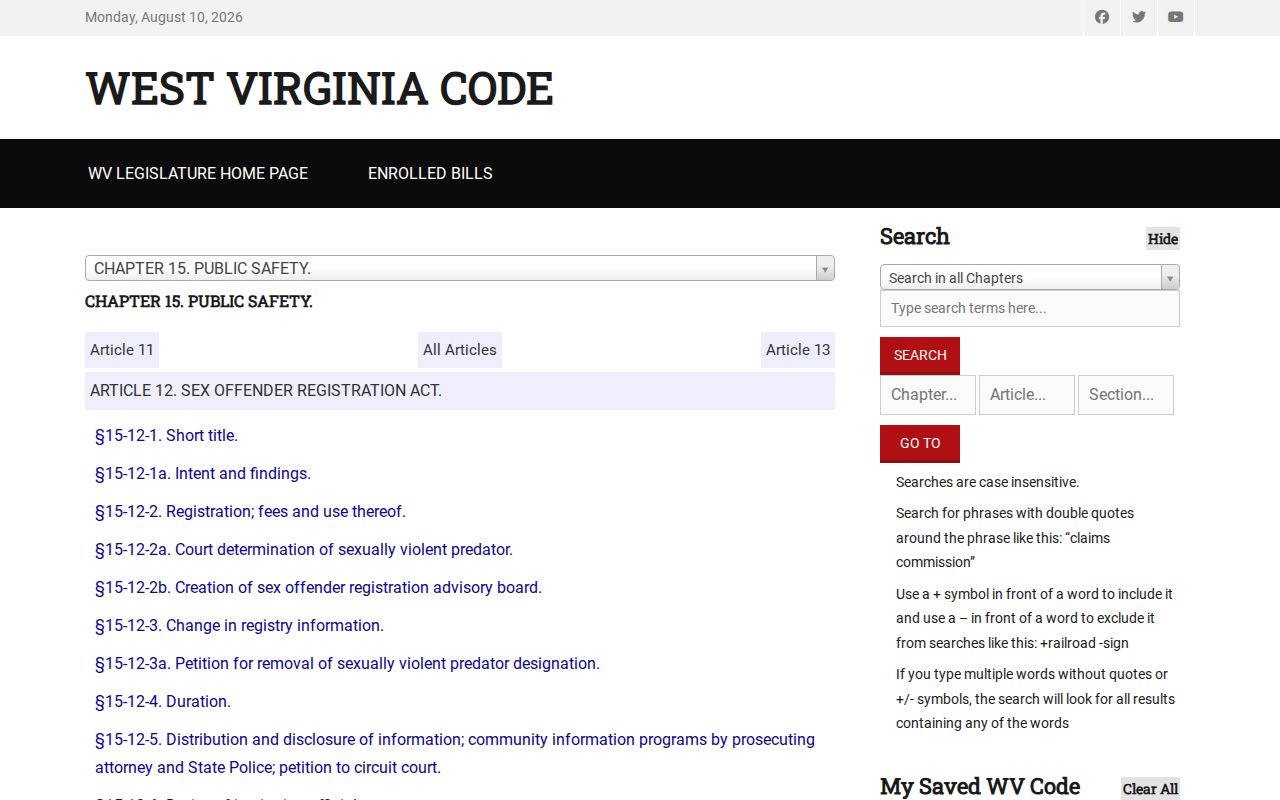
Reading the statute beside a profile helps separate a registration rule from an unsupported judgment about risk.
What a Registry Profile Shows
A public Gilmer County registry profile can combine identity, location, offense, and compliance information that comes from the registration process. Exact visibility depends on the person's statutory category. A listed address is limited to information authorized for public release, and the page may flag a fact that is changing or under verification. The profile can also contain schools, workplaces, vehicles, or distinctive marks when statute calls for those items. No single field should carry the whole match.
| Name and Aliases | Registered name plus other names supplied or recorded under the law. |
|---|---|
| Photo and Description | Photograph and physical traits that help distinguish people with similar names. |
| Public Address | Residence information authorized for public display, subject to status and verification notices. |
| Offense and Statute | Qualifying offense, legal citation, conviction date, and jurisdiction where shown. |
| Registration Dates | Dates tied to initial registration, updates, or other reported duties. |
| Status and Identifiers | Compliance status and, where applicable, vehicles, schools, workplaces, scars, marks, or tattoos. |
Match the full set of fields, then check the status note. A stale or questioned address should be reported for review, not treated as proof that someone supplied false data.
Gilmer County Registry Checks Across State Lines
The WVSP portal is the right state source for a Gilmer County sex offender check, but a name or address history may cross a border. The U.S. Department of Justice operates the National Sex Offender Public Website, or NSOPW, to search public registry data from participating jurisdictions. It adds reach rather than replacing WVSP. West Virginia questions and corrections still belong with the West Virginia registry.
The official national search shown below is most useful when a person moved to or from Gilmer County, when the state connected to an older address is unclear, or when a family safety check covers more than one state.
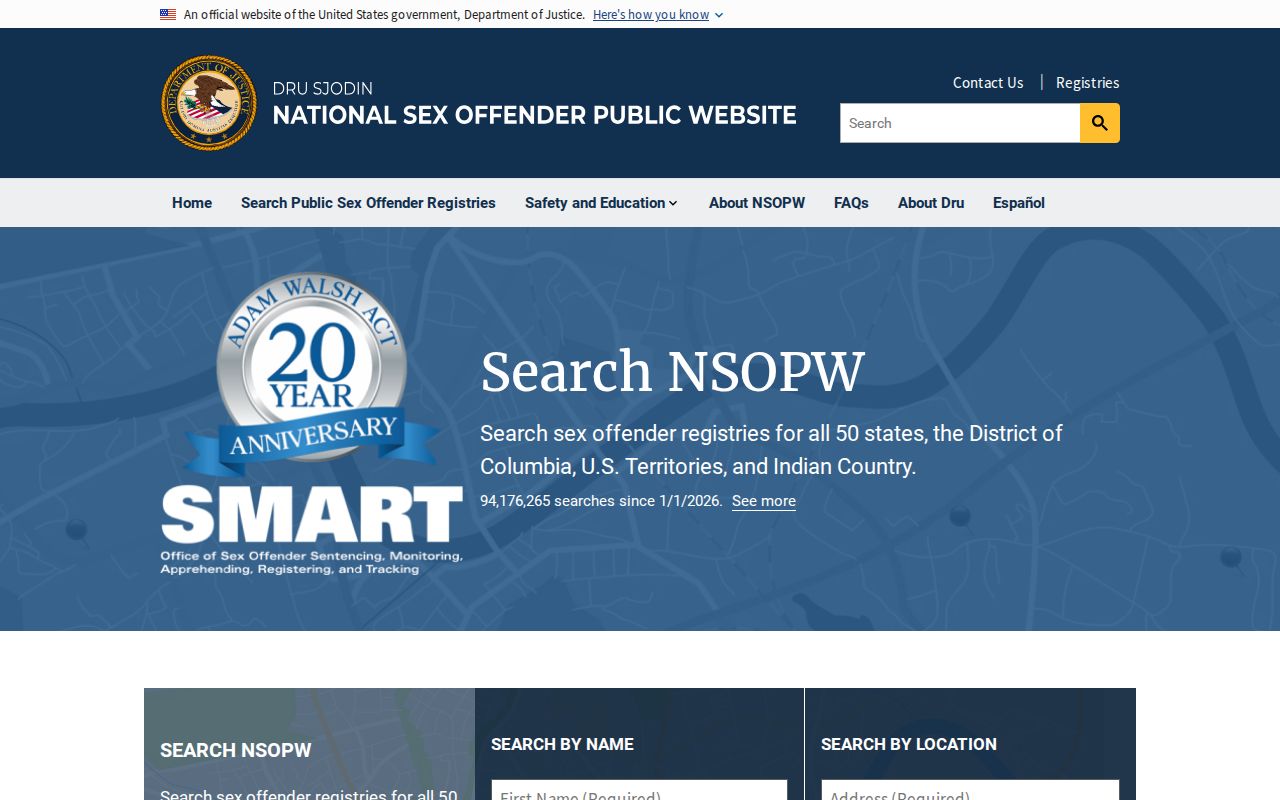
A cross-state result should be opened at its contributing jurisdiction so the local status and update notes can be read in context.
Registration Requirements and Levels in West Virginia
West Virginia Code §15-12-4 sets the duration rules that apply in Gilmer County. Most registrants who do not meet a lifetime category register for ten years, measured from release from custody or placement on probation, parole, or supervised release as the statute directs. Later incarceration can affect that period. Lifetime duties apply to listed categories rather than to a public-facing three-tier score.
The official duration-rule source captured below is the key text for understanding why two Gilmer County profiles may carry different registration periods.
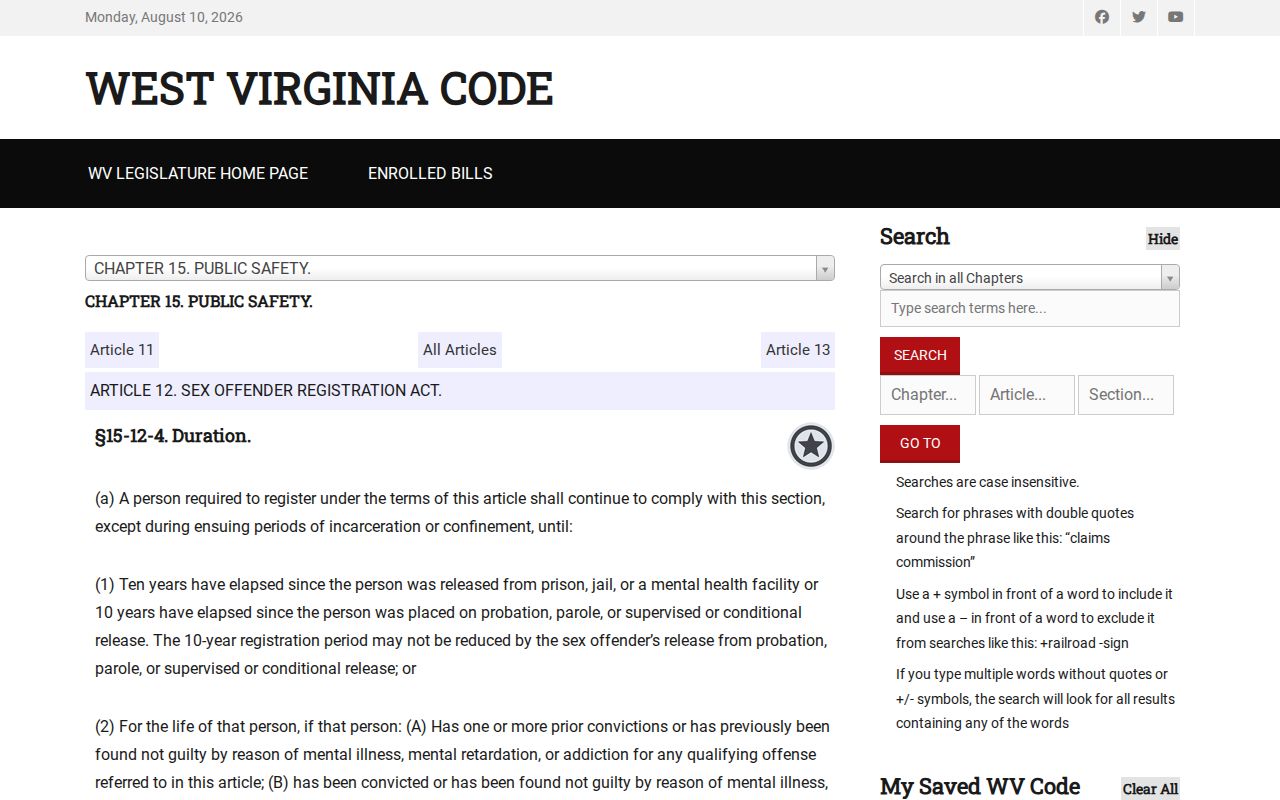
The table distills those statutory categories without adding a risk label or a verification schedule the research did not establish.
| West Virginia Category | Duration | Public Meaning |
|---|---|---|
| No lifetime criterion | 10 years | Runs from the statutory custody or supervision starting point, with later custody treated as the law provides. |
| Prior qualifying conviction | Life | A prior offense meeting the statute triggers lifetime registration. |
| Multiple victims or violations | Life | Requires the court finding described in the statute on a prosecutor's motion. |
| Sexually violent offense or predator finding | Life | The offense or judicial determination supplies the lifetime basis. |
| Offense involving a minor or perceived minor | Life | The statute assigns lifetime registration to this category. |
Gilmer County Registry Uses State Police
Registration is not completed through a public web form or the Gilmer County Sheriff's Office. Under the state act, registrants report to the West Virginia State Police detachment serving their county and supply or update the information required by law. The research did not confirm a published Gilmer County verification timetable, a local appointment calendar, or a county registry unit. Readers should not infer one from another county's practice.
The statute also addresses how registry information may be distributed. The official information-distribution rule in §15-12-5 is shown in the capture below.
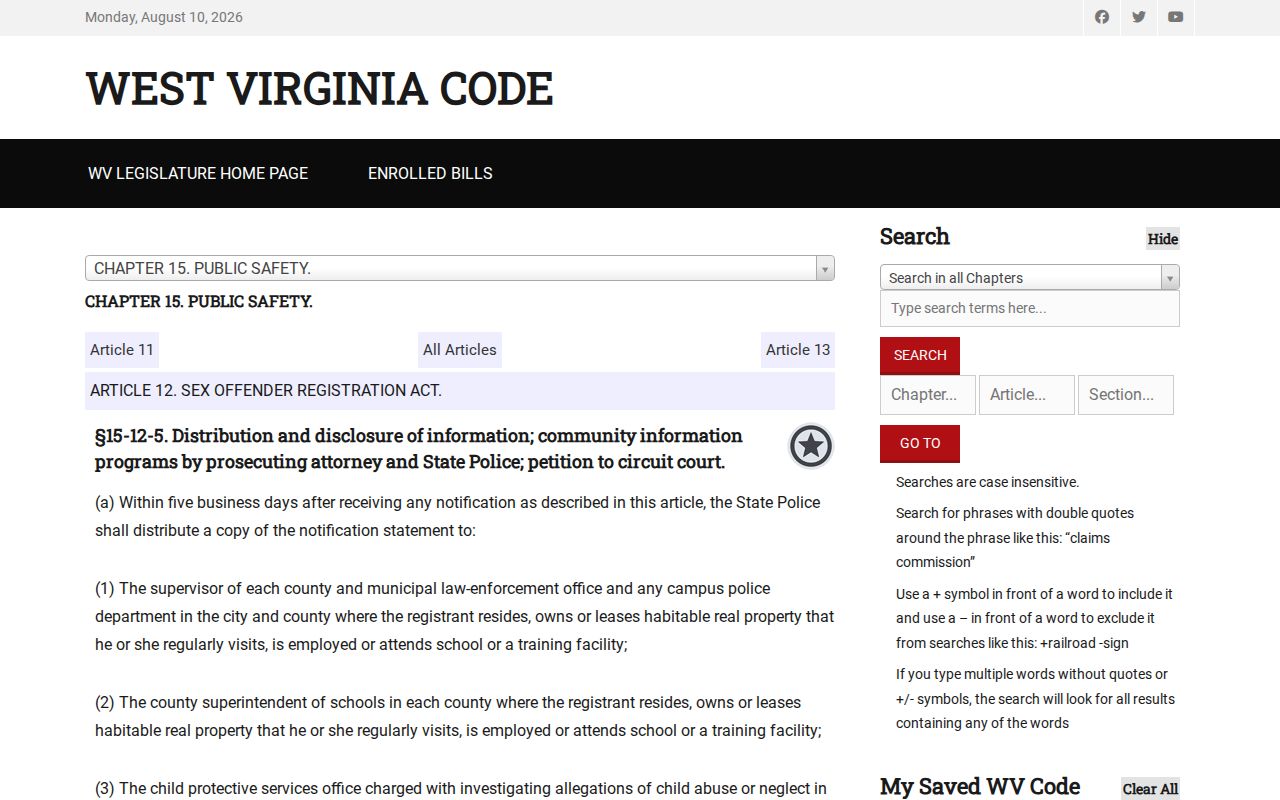
That legal route explains why the public sees authorized registry facts while other information remains outside the public profile.
Correcting a Gilmer County Registry Address
An address that appears old, incomplete, or wrong calls for a report, not a confrontation. First, reopen the Gilmer County profile and read any message that says the information is under verification. Check whether the record reflects a residence, school, workplace, or another type of location. If the issue remains, contact the WVSP Registry at 304-746-2133 or registry@wvsp.gov. Give the profile and the specific fact at issue without posting the person's data elsewhere.
Suspected failure to register or update required facts should also go to law enforcement. The WVSP Registry can route registry concerns, and the detachment serving Gilmer County handles registration under state law. For an urgent threat, use the appropriate emergency channel. NSOPW is a search layer, not the office that corrects a West Virginia record. This reporting chain protects safety while giving the agency that owns the data a clear chance to verify it.
Note: A status under verification is a reason to seek confirmation, not evidence that the listed person violated the registration law.
Lawful Use and Community Notification
Gilmer County registry data exists so community members can take informed and lawful safety steps. A search can support a family plan, a check around a home, or awareness when someone moves across state lines. It must remain tied to the public facts and current status notes. WVSP states that threats, intimidation, and harassment are prohibited and investigated. Users should never visit a listed address to test the data or contact a registrant's household.
The Registry's disclaimer and the West Virginia Sex Offender Registration Act control the public use of Gilmer County sex offender information. When a result seems wrong, use the correction contacts. When noncompliance is suspected, give the facts to WVSP or the proper law-enforcement office. Those channels allow trained staff to check records without placing residents, registrants, or their families at risk.
Misuse is a crime: West Virginia Code §15-12-5 and the WVSP disclaimer forbid using registry information to harass, intimidate, or threaten a registrant or household.